Tether ($USDT) Linked to Iran Funding: What It Means for Crypto
A bombshell Senate report drops on the world's biggest stablecoin while crypto Twitter collectively loses its mind
Ticker Ratings
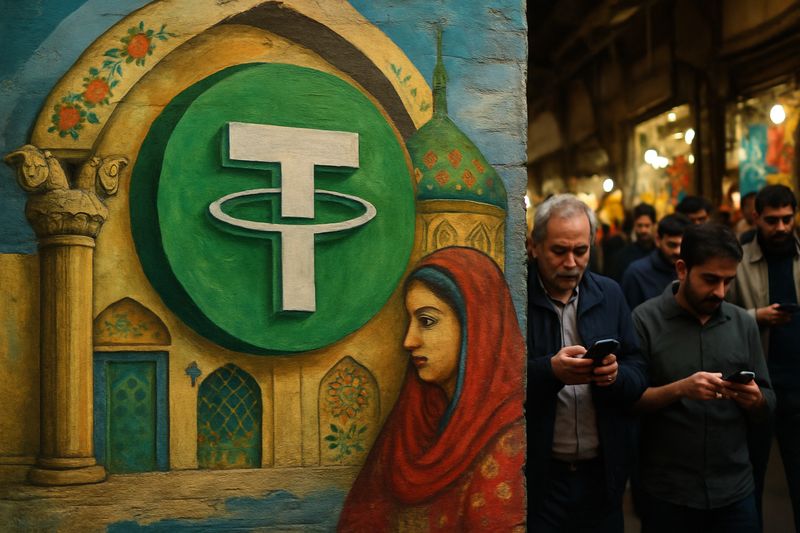
Of all the weeks to get a Senate report calling out your stablecoin, this is not the one. Tether's $USDT is in the crosshairs after Reuters reported that a new Senate investigation found the world's largest stablecoin was used to aid Iranian funding operations. Combined with an active US-Iran war, record UK diesel prices, and Trump rejecting Tehran's peace proposals, the geopolitical pressure on crypto's most important piece of plumbing just went from simmer to full boil.
The report lands at a genuinely terrible moment for the broader market. The 10-year Treasury yield is sitting at 5.17%, equities closed lower four of the last five sessions (the S&P 500 dropped 0.77% on September 28 alone), and risk appetite is already getting squeezed from multiple directions. Crypto does not get a pass when the macro environment looks like this, and a regulatory grenade lobbed directly at USDT is the last thing bulls needed to see on a Monday.
Here is why this actually matters beyond the obvious headline risk. USDT is the oxygen tank of the entire crypto ecosystem. It is the dominant trading pair across centralized and decentralized exchanges. If regulators use this Senate report as a catalyst for meaningful enforcement action, the knock-on effects for $BTC and $ETH liquidity could be significant. We are not talking a minor inconvenience. We are talking potential forced de-listing conversations at major US exchanges.
X (formerly Twitter) has been predictably split: the crypto-native crowd is calling it a political hit job, pointing out that the US dollar funds plenty of things nobody loves either. The more traditional finance crowd is treating it as validation that stablecoins need real regulatory frameworks yesterday. Both sides have a point, which is the most annoying possible outcome for everyone involved.
The bull case for $BTC here is actually counterintuitive. If USDT faces regulatory pressure and traders need to flee to something, Bitcoin's narrative as a censorship-resistant, non-custodial asset gets louder. The bear case is simpler: liquidity dries up, spreads widen, and everyone heads for the exit at once. Watch what happens at the $95,000 BTC support level over the next 48 hours. If it holds with this kind of headline risk, that tells you something real about where conviction sits right now.
Tether has survived regulatory scares before, but never during an active US war where its product is named in a Senate report as a funding mechanism. This one has a different texture to it.