CoreWeave $CRWV Drops 20% in 2 Days as AI Debt Crisis Deepens
Social sentiment is turning fast on leveraged AI infrastructure plays, and the credit markets got there first
Ticker Ratings
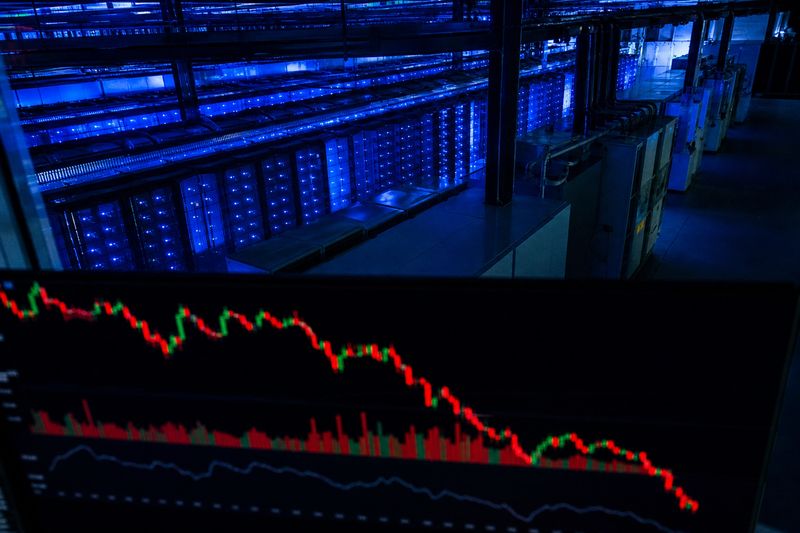
While everyone was busy debating whether $NVDA had bottomed after its wild Monday reversal, the real story this week was quietly detonating in the bond market. $CRWV (CoreWeave) posted back-to-back double-digit declines of 10% and 11%, completely erasing its Monday pop, and its bonds are now hitting all-time lows. That is not a dip. That is a warning flare.
The issue, as Bloomberg Podcasts and Seeking Alpha both flagged this week, is leverage. CoreWeave's entire business model is built on borrowing heavily to finance AI infrastructure, then renting that infrastructure to customers. It works beautifully when capital is cheap and AI spending is accelerating. It works considerably less beautifully when 10-year Treasury yields sit at 4.91%, credit default swap levels hit records, and analysts start pulling forward the AI capex saturation timeline from 2029 to as early as 2027.
Oracle is in a similar boat. With a debt-to-equity ratio over 251%, it's carrying leverage that would make most CFOs need a stiff drink, and unlike Alphabet (under 23% debt-to-equity) or Microsoft, it doesn't have a cash flow fortress to absorb the pressure. SoftBank's debt protection costs have reportedly surged above 500 basis points, signaling that credit markets are pricing real distress across the AI infrastructure complex, not just individual company wobbles.
YouTube sentiment this week split sharply between two camps. The bulls, led by Fundstrat's crew, are treating this as a buyable pullback with a Black Friday bow on it. The bears, citing everything from Nvidia's leverage concerns to smuggled American chips accounting for an estimated 22% of China's AI data center capacity, think the structural story is cracking. The Nasdaq itself briefly dipped into bear market territory before recovering, and the VIX is still sitting at 26.36, well above the comfort zone.
The food inflation angle adds an overlooked macro layer here. With the Strait of Hormuz under threat from Iranian mine warnings and Houthi escalation, fertilizer supply chains are exposed, and roughly a third of global fertilizer trade moves through that corridor. That feeds directly into the broadening inflation story that just prompted a sharp upward revision to Q3 GDP growth, complicating the Fed's math and keeping yields elevated, which is exactly the wrong environment for debt-heavy growth bets.
The AI trade is not dead, but the era of consequence-free leverage to build it out very much appears to be over, and the credit market, as usual, figured that out about three weeks before the rest of us.
BullApe's AI grades every pick against the S&P 500 - wins and misses published. See the track record →